
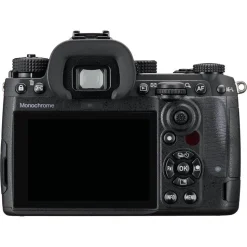
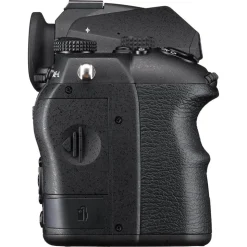
Pentax K-3 Mark III Monochrome
$171.00
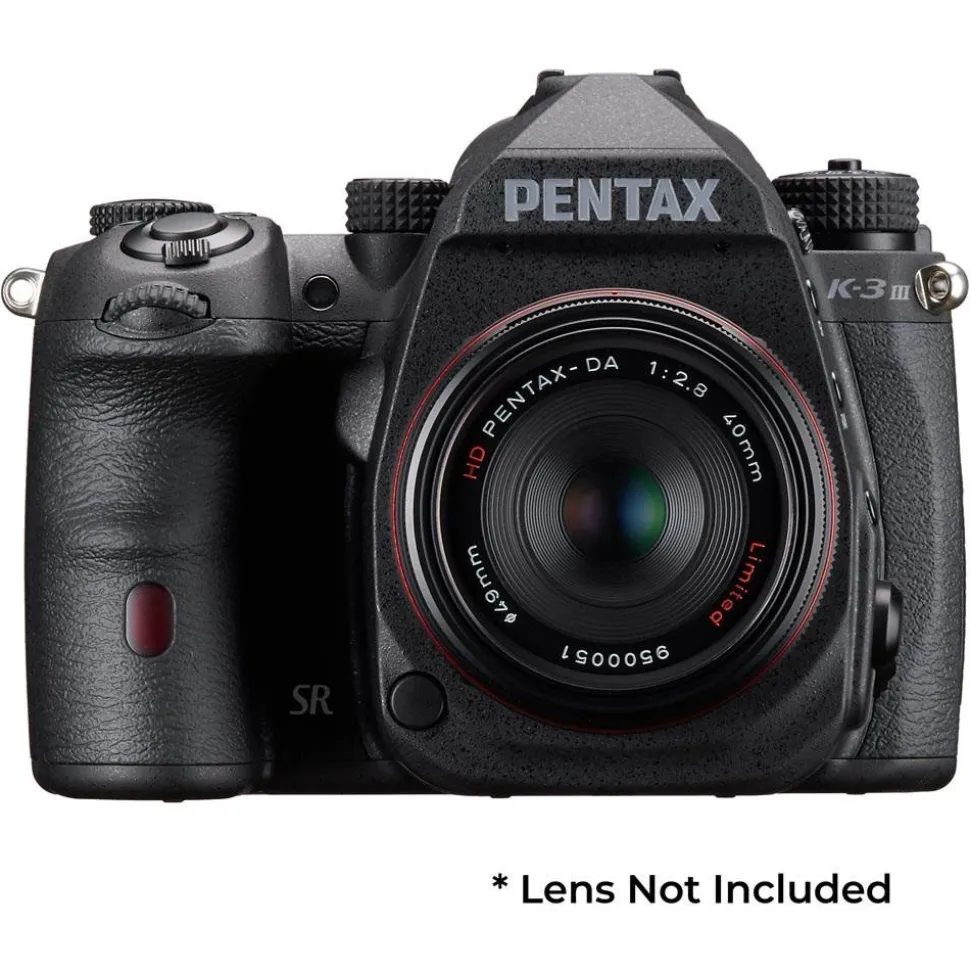
- Exclusively designed DSLR camera which is made for photographers to capture purely black and white images
- High resolution APS-C format sensor design records highlight and shadow detail which are rich in tonal gradation
- Exclusive monochrome themed camera body design with grey toned buttons and top panel LCD white light
- Three image modes made especially to refine monochromatic photos through settings such as tone, key, contrast and sharpness
- Built-in 5-axis body shake reduction system effective for any K mount lenses whether vintage or newly released
Key Features
- Specially designed monochromatic APS-C-format CMOS sensor
- Exclusively for black and white photography
- Captures 25.73 megapixel resolution images rich gradation
- Exclusive Standard, Hard and Soft modes for B&W photography
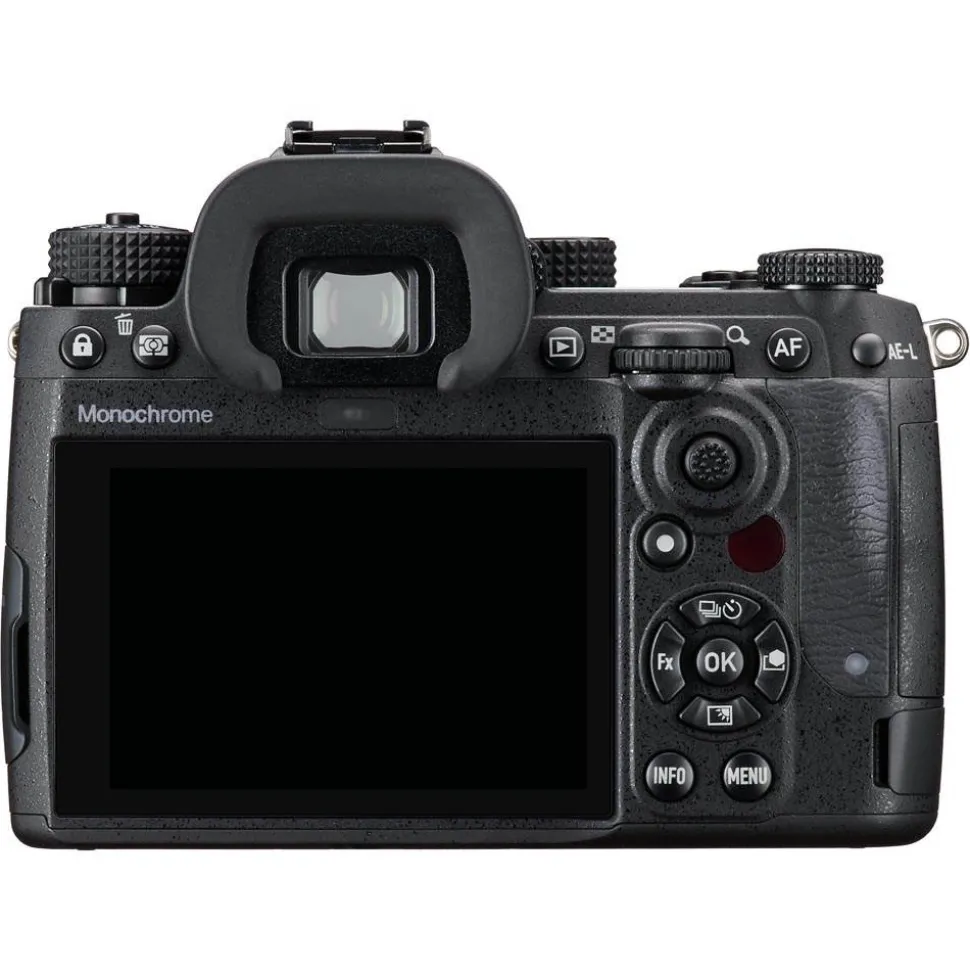
- Camera body design themed with monochrome lettering and white LCD panel light
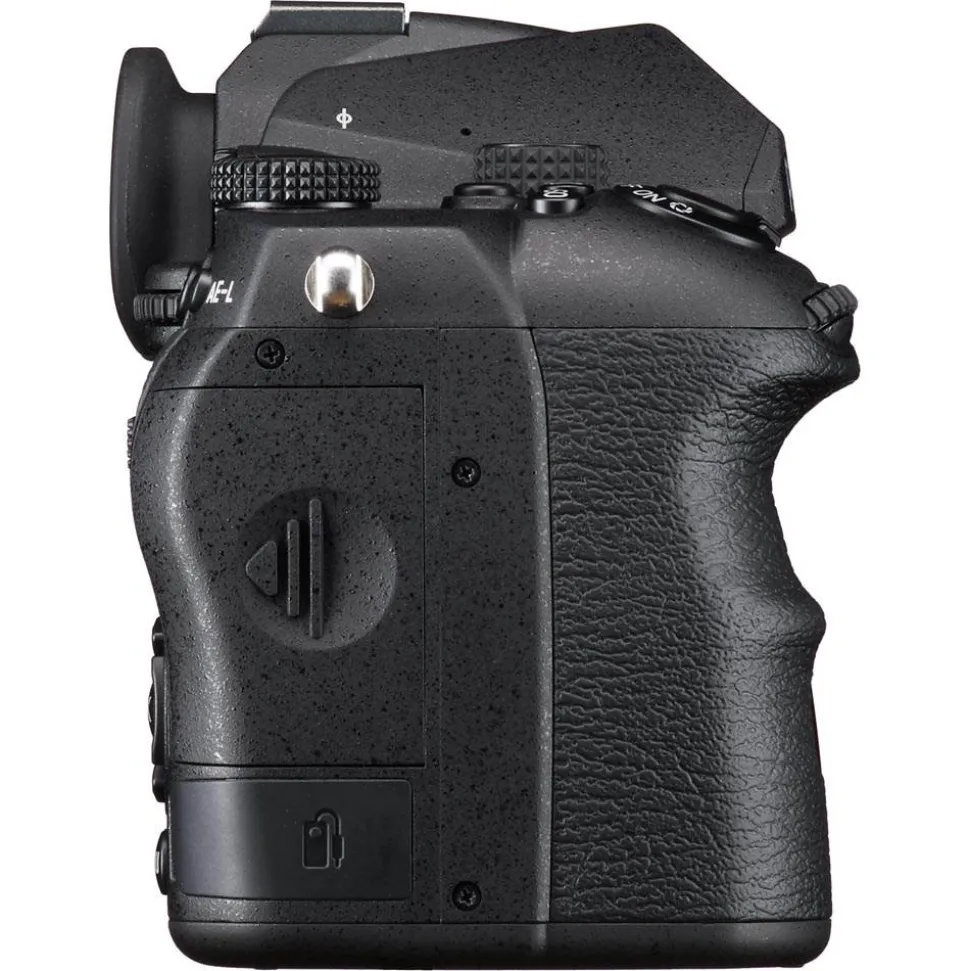
- Camera buttons and switches finished in grey
- In-body shake reduction mechanism
- White balance button replaced with an Fx (function) button
Pentax K-3 Mark III Monochrome Camera Body Summary
Pentax has utilised a specific monochrome sensor, which solely records black and white data for the Pentax K-3 Mark III Monochrome DSLR camera, enabling you to capture beautiful images rich in tonal gradation. It has been designed for photographers who pursue and compose their images solely with light and shadow, in order to express a unique view of the world.
Every pixel in the high resolution 25.73 megapixel APS-C-format CMOS sensor detects brightness data coming through the lens and converts this in order to compose a photograph. continued the monochrome theme across the K-3 Mark III Monochrome camera body design, with white backlight illumination on the LCD data panel and grey toned buttons and dials. The camera also features three Custom Image modes designed exclusively for the monochrome sensor, which provide adjustment of tone, key, contrastand sharpness, for fine tuning of the results. Photographers also gain an advanced SR (Shake Reduction) mechanism found in certain , which helps to capture blur-free images while optimising the distinctive expression of each .
Pentax K-3 Mark III Monochrome in More Detail
Monochrome image sensor
The Pentax K-3 Mark III Monochrome features a Monochrome APS-C-format CMOS image sensor with approx. 25.73 effective megapixels specifically designed to capture only black and white images. By designing the camera solely for the purpose of monochrome photography, each pixel detects brightness data of the light coming through the lens. The obtained data is then directly converted to compose an image. This enables the photographer to create extra-fine monochromatic expression in an image high in resolution and rich in gradation.
Capture pure images through only light and shadow
Monochrome (or black-and-white) photography is the origin of photographic art. Without colour data, monochrome can more clearly depict the form and texture of a subject using light, shadow and the in-between gradations. This means that the photographer can create images that are more impressive and persuasive. By designing the camera solely for the purpose of monochrome photography, each pixel detects brightness data of the light coming through the lens. The obtained data is then directly converted to compose an image.
Typical colour image sensors are designed to receive light passing through red (R), green (G) and blue (B) colour filters, so each pixel detects only one colour data component. To compose a monochrome image, colour sensors must convert colour data into monochromatic data by interpolating the obtained colour data while using adjacent areas of the image field as a reference.
Since a monochrome-specific image sensor can faithfully reflect the brightness data obtained by each pixel in the image — without the interpolation process — the photographer can create extra-fine monochromatic expression, in an image high in resolution and rich in gradation.
Image quality made exclusively for black and white photography
Image quality has been re-evaluated and redesigned to optimise the imaging characteristics of the monochrome-specific image sensor. Unlike a colour sensor that requires the interpolation process, each pixel of the monochrome-specific image sensor corresponds precisely to each pixel in the resulting image. The result is minimal deterioration of the data obtained, and optimal visual expression. To optimise these advantages, the imaging process has been completely restructured to assure highly sensitive expression with a natural bokeh (defocus) effect, rich gradation and extra-fine sharpness — an image only the monochrome-specific image sensor can deliver.
Monochrome-specific Custom Image modes
The camera features three Custom Image modesexclusively designed for the monochrome-specific image sensor: Standard, Hard and Soft. Each mode provides minute adjustment of parameters such as tone, key, contrast, and sharpness. This allows the photographer to personalise images for the desired finishing touch.
Exterior body design reflects the monochrome concept
The concept of monochrome photography is evident throughout the Pentax K-3 Mark III Monochrome camera body, from the white backlight illumination on the LCD data panel positioned on its upper panel, to the Monochrome lettering printed on the upper-left shoulder of the back panel. The camera’s User Interface menu features a black-and-white colour scheme as default, while the icons printed on buttons and switches across the camera’s exterior are finished in three shades of grey.
Other noteworthy features
- Minimum ISO setting at 200 – Since the monochrome-specific image sensor is free of the colour filters that cause a loss of light, it can take in more light. This allows the camera’s minimum ISO to be set at 200.
- Fx button – Unlike full-colour photography, in which colour reproduction varies depending on the light source (or colour temperature), monochrome photography doesn’t require white balance control. In the Pentax K-3 Mark III Monochrome, the white balance button of the Pentax K-3 Mark III is replaced with the Fx (function) button.
- In-body 5-axis shake reduction mechanism – The Pentax K-3 Mark III Monochrome incorporates an advanced SR (Shake Reduction) mechanism, which lets the photographer use all types of lenses, whether the latest or vintage and to capture sharp, blur-free images while optimising the distinctive visual expression of each lens.
Huge range of lenses and accessories
Joining the Pentax K mount system provides access to a huge variety of as well as and vintage legacy lenses, which are fully compatible with the camera. You’ll also benefit from a large selection of , which are available to enhance any photographic journey.
Sample Images
Sample 1 by Kerrick James. Captured with K-3 Mark III Monochrome and HD PENTAX-DA* 11-18mm F2.8 ED DC AW
Sample 2 by Kerrick James. Captured with K-3 Mark III Monochrome and HD PENTAX-D FA MACRO 100mm F2.8ED AW
What’s in the Box
- Pentax K-3 Mark III Monochrome Camera Body
- Strap O-ST162
- ME Viewfinder Cap
- Rechargeable
- Power Plug
- USB Cable I-USB166
- Software for PC Digital Camera Utility 5 (Installer saved inside the camera)
| Offers: Price Drop |
| Offer Category: N/A |
| Offer Product Type: N/A |
| Model: N/A |
| AE Bracketing: N/A |
| Autofocus Modes: N/A |
| Articulated Screen: N/A |
| Aperture priority: N/A |
| Battery: N/A |
| Built-in flash: N/A |
| Battery Life (CIPA): N/A |
| Camera CIPA image stabilization rating: N/A |
| Colour: N/A |
| Continuous drive (fps): N/A |
| Custom white balance: N/A |
| Digital zoom: N/A |
| Effective pixels (megapixels): 25 |
| Environmental Sealing: N/A |
| Exposure compensation: N/A |
| External flash: N/A |
| Flash range (metres): N/A |
| Focal length (equiv.): N/A |
| Focal length multiplier: N/A |
| Flash modes: N/A |
| GPS: N/A |
| HDMI Port: N/A |
| Headphone port: N/A |
| Height (mm): N/A |
| Length (mm): N/A |
| Width (mm): N/A |
| Weight (g): N/A |
| Weight (inc. batteries) (g): N/A |
| Image ratio w:h: N/A |
| Camera Image stabilization: N/A |
| ISO: N/A |
| JPEG quality levels: N/A |
| Live view: N/A |
| Camera Lens mount: N/A |
| Manual exposure mode: N/A |
| Maximum shutter speed (electronic): N/A |
| Maximum ISO: N/A |
| Maximum ISO (boosted): N/A |
| Max resolution: N/A |
| Maximum shutter speed (seconds): N/A |
| Maximum aperture: N/A |
| Manual focus: N/A |
| Microphone: N/A |
| Microphone port: N/A |
| Camera Minimum focus distance (cm): N/A |
| Minimum ISO: N/A |
| Minimum ISO (boosted): N/A |
| Minimum macro focus distance (cm): N/A |
| Minimum shutter speed (seconds): N/A |
| Metering modes: N/A |
| Number of focus points: N/A |
| Number of white balance presets: N/A |
| Optical zoom multiplier: N/A |
| Orientation sensor: N/A |
| Other resolutions: N/A |
| Processor: N/A |
| Remote control: N/A |
| Screen dots: N/A |
| Screen size: N/A |
| Screen type: N/A |
| Self-timer: N/A |
| Shutter priority: N/A |
| Speaker: N/A |
| Sensor photo detectors (megapixels): N/A |
| Sensor size: N/A |
| Sensor type: N/A |
| Storage types: N/A |
| Subject / scene modes: N/A |
| Timelapse recording: N/A |
| Touchscreen: N/A |
| Camera Type: N/A |
| Uncompressed format: N/A |
| Camera USB: N/A |
| USB charging: N/A |
| Viewfinder coverage: N/A |
| Viewfinder magnification: N/A |
| Viewfinder resolution: N/A |
| Viewfinder type: N/A |
| Video formats: N/A |
| Video Mode Categories: N/A |
| Video Modes: N/A |
| WB Bracketing: N/A |
| Wireless: N/A |
| Notes: N/A |
Be the first to review “Pentax K-3 Mark III Monochrome”
Related products
Action Camera Accessories
Cameras
Cameras

Cameras
Action Camera Accessories

Cameras
Login

Reviews
There are no reviews yet.